Hook
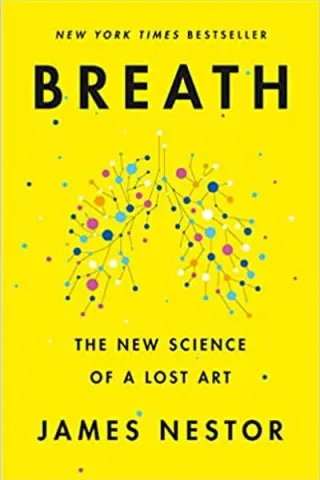
You breathe 25,000 times a day and you’re probably doing it wrong. James Nestor spent ten years investigating why modern humans have become terrible breathers — and how fixing this one thing can transform your health, performance, and sleep.
What It’s About
Breath explores how the way we breathe affects virtually every system in the body — and how modern life has made us terrible at it. Nestor, a journalist, underwent a Stanford experiment where he breathed exclusively through his mouth for ten days (his health markers deteriorated dramatically) and then exclusively through his nose for ten days (they recovered). This personal experiment frames a wider investigation into the science and history of breathing.
Nestor traces how modern diets (soft, processed food) have narrowed human airways over generations, making breathing more difficult. He visits respiratory researchers, freediving champions, choir directors, and practitioners of ancient breathing techniques from India, Tibet, and Japan. He explores how specific breathing patterns can lower blood pressure, reduce anxiety, improve athletic performance, and even change the pH of your blood.
The book covers a range of breathing techniques — from slow breathing (5.5 breaths per minute, the rate found in prayer and meditation traditions worldwide) to Wim Hof’s extreme hyperventilation method to the ancient yogic practice of alternate nostril breathing. Nestor presents the research behind each technique with journalist’s skepticism and genuine curiosity.
Key Takeaways
The single most impactful change is nasal breathing. Nestor presents compelling evidence that breathing through the nose — rather than the mouth — improves oxygen uptake, filters pathogens, regulates blood pressure, and improves sleep quality. Most modern humans mouth-breathe, especially during sleep, and this simple switch can produce noticeable health improvements within days.
The research on slow breathing — approximately 5.5 breaths per minute with extended exhales — is also immediately practical. This pattern activates the parasympathetic nervous system, reduces stress hormones, and improves heart rate variability. Remarkably, this same breathing rate appears independently in rosary prayers, Buddhist chants, and Hindu mantras, suggesting that ancient traditions discovered optimal breathing patterns millennia ago.
The Verdict
Breath is a fascinating, well-reported book that will probably change at least one thing about how you breathe. Some claims about extreme breathing techniques would benefit from more rigorous evidence, but the core message — breathe through your nose, breathe slowly, and pay attention to your breathing — is well-supported and immediately actionable.