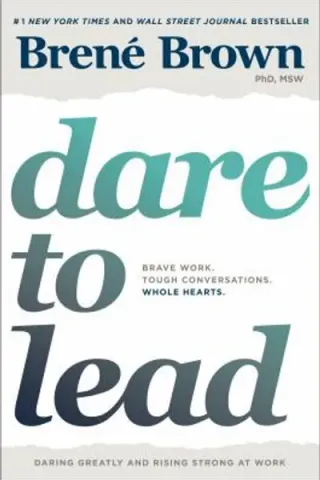
Hook
What would leadership look like if it were rooted in courage rather than armor? Brene Brown brings her vulnerability research into the C-suite and discovers that the bravest leaders are also the most vulnerable.
What It’s About
Dare to Lead applies Brown’s research on vulnerability, courage, shame, and empathy specifically to organizational leadership. She argues that “daring leadership” requires four skill sets: rumbling with vulnerability (having tough conversations), living into your values (not just talking about them), braving trust (building it incrementally), and learning to rise (recovering from failure).
Brown draws on her work with military leaders, Fortune 500 executives, and entrepreneurs to show that courageous leadership isn’t about being tough or having all the answers. It’s about having the humility to say “I don’t know,” the courage to have difficult conversations, and the emotional awareness to manage yourself and connect with others.
The book includes practical tools: the BRAVING trust inventory, the “rumble” framework for productive conflict, the “values exercise” for identifying your two core values, and the “engaged feedback checklist.” These tools are immediately applicable and distinguish the book from abstract leadership theory.
Key Takeaways
The BRAVING trust acronym — Boundaries, Reliability, Accountability, Vault (keeping confidences), Integrity, Non-judgment, and Generosity — provides a specific, measurable framework for building and assessing trust. Unlike vague advice to “build trust,” BRAVING gives leaders concrete behaviors to practice and evaluate.
Brown’s insight that “clear is kind, unclear is unkind” is a powerful reframe for leaders who avoid difficult conversations. Being direct about expectations, feedback, and concerns isn’t cruel — it’s compassionate. The people who suffer most from unclear leadership are the ones receiving it.
The Verdict
Dare to Lead is a strong application of Brown’s research to organizational leadership. It’s more tactical than Daring Greatly and more focused than The Gifts of Imperfection. If you lead a team and want to build a culture of trust and courage, this provides both the philosophy and the practical tools.