Hook
The difference between people who achieve their goals and those who don’t isn’t talent or luck — it’s how they handle failure. John Maxwell argues that average people fail and stop; achievers fail and learn.
What It’s About
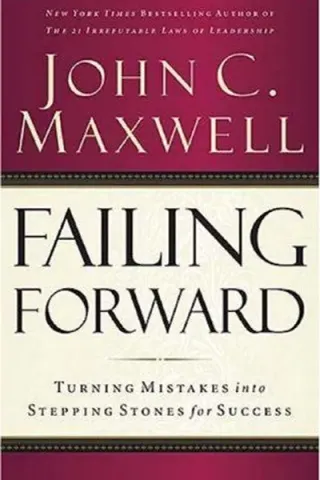
Failing Forward makes the case that failure is not the opposite of success but a necessary ingredient of it. Maxwell, one of the world’s most prolific leadership authors, shares stories of famous failures — from Thomas Edison to Abraham Lincoln to Walt Disney — and distills the principles that allowed them to use failure as a stepping stone rather than a stopping point.
The book identifies fifteen steps for transforming failure into growth, including redefining failure (as an event, not an identity), removing the fear of failure, changing your response to failure, and maintaining positive expectations despite setbacks. Maxwell emphasizes that failing forward is a skill, not a personality trait — anyone can learn to extract value from failure and keep moving.
The writing is warm, encouraging, and heavily anecdotal. Maxwell’s pastoral background shows in his encouraging tone, and the stories are chosen for maximum inspiration. The principles are sound if familiar: persistence, learning, resilience, and reframing.
Key Takeaways
Maxwell’s distinction between people who “fail backward” and those who “fail forward” is his most useful framework. People who fail backward blame others, repeat the same mistakes, and expect never to fail again. People who fail forward take responsibility, learn from each failure, and accept failure as a necessary part of growth.
The practical advice to “fail early, fail fast, and fail often” anticipates the Silicon Valley mantra by over a decade. Maxwell argues that the cost of failure increases the longer you wait — making small, quick failures early is far less expensive than one catastrophic failure later.
The Verdict
Failing Forward is a solid, motivational book about resilience and learning from failure. It doesn’t break new ground for experienced self-help readers, but Maxwell’s warm style and practical framework make it accessible and encouraging. Best for readers who are paralyzed by fear of failure.