Hook
On the Japanese island of Okinawa, more people live past 100 than anywhere else on Earth. Their secret isn’t just diet or exercise — it’s ikigai, a concept that means “a reason for being.”
What It’s About
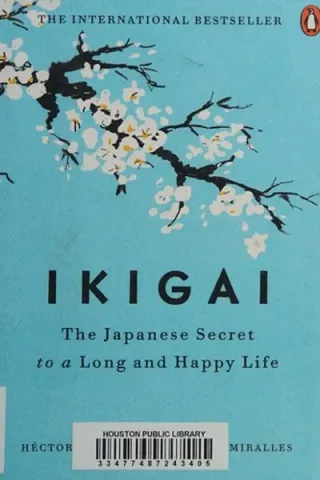
Ikigai explores the Japanese concept of “a reason for being” — the intersection of what you love, what you’re good at, what the world needs, and what you can be paid for. Garcia and Miralles traveled to Ogimi, Okinawa — the village with the world’s highest concentration of centenarians — to interview residents about their secrets to longevity and fulfillment.
The book covers several themes: the concept of ikigai itself, the role of community and social connection in longevity, the importance of gentle daily movement (as opposed to intense exercise), diet principles from Okinawan centenarians (eating until 80% full, a mostly plant-based diet), the psychology of flow states, and resilience techniques from Stoicism and Buddhism.
The writing is breezy, accessible, and often beautiful. The interviews with centenarians are charming and inspiring — these are people who garden, socialize, practice tai chi, and maintain strong purposes well into their 100s. However, the book skims across topics rather than diving deep into any of them. Each concept gets a few pages before moving on, and the treatment of ikigai itself is surprisingly thin — the famous four-circle Venn diagram isn’t actually from Japanese tradition but from a Western adaptation.
Key Takeaways
The lifestyle patterns of Okinawan centenarians offer practical wisdom: eat mostly plants, stop eating when you’re 80% full, maintain a strong social network, stay physically active through daily movement rather than gym sessions, and have a clear reason to get up every morning. These overlap significantly with Blue Zones research and are well-supported by longevity science.
The concept of finding your ikigai — even in a simplified Western version — provides a useful framework for career and life reflection. The four questions (What do I love? What am I good at? What does the world need? What can I be paid for?) can clarify thinking about purpose and professional direction.
The Verdict
Ikigai is a pleasant, quick read that introduces several useful concepts without mastering any of them. It’s a good entry point if you’re new to longevity research, flow theory, or the idea of purposeful living. But readers looking for depth will find more substance in dedicated books on each topic — Blue Zones for longevity, Flow for optimal experience, and So Good They Can’t Ignore You for career purpose.