Hook
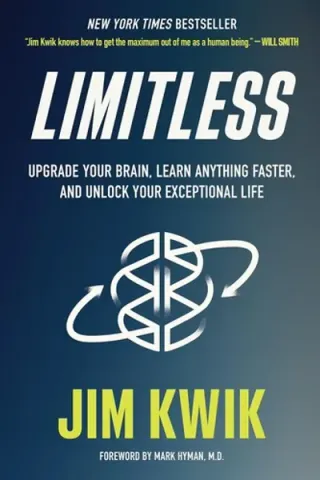
A childhood brain injury left Jim Kwik as “the boy with the broken brain.” He went on to become the world’s most famous brain coach, training executives at Google, Nike, and SpaceX. His method promises to unlock your brain’s full potential — but can it deliver?
What It’s About
Limitless presents Kwik’s framework for optimizing brain performance across three areas: mindset (believing you can learn), motivation (creating the drive to learn), and methods (techniques for reading faster, remembering more, and thinking more clearly). Kwik calls these the “three M’s” and argues that all three must be aligned for real cognitive improvement.
The book covers speed reading techniques, memory improvement methods (including the “memory palace” technique), strategies for focus and concentration, and approaches to meta-learning. Kwik draws on neuroscience research, though with a populist rather than academic approach, and shares personal stories of overcoming his childhood brain injury.
The writing is energetic and motivational, with practical exercises at the end of each chapter. Kwik’s background as a speaker and coach shows — the book reads like a well-structured seminar. The techniques he teaches are real (memory palaces, active recall, spaced repetition), but the marketing language (“unlock your limitless brain”) overpromises relative to what these techniques actually deliver.
Key Takeaways
The speed reading techniques — using a visual pacer, reducing subvocalization, expanding peripheral vision — are practical and can produce real improvements. These aren’t revolutionary techniques, but Kwik presents them clearly and provides practice exercises.
The memory palace technique — associating information with physical locations in an imagined space — is genuinely effective and backed by research. It’s been used by memory champions for decades, and Kwik’s presentation makes it accessible to beginners.
The Verdict
Limitless contains legitimate learning and memory techniques wrapped in excessive hype and self-promotion. The practical exercises are genuinely useful, but the suggestion that these techniques will make your brain “limitless” oversells what are really modest (though real) improvements. Take the tools, leave the marketing.