Hook
Mozart wasn’t born a genius — he was trained as one, starting at age three with a father who was Europe’s leading music educator. Robert Greene argues that mastery follows a universal pattern, and the so-called naturals are always hiding years of invisible preparation.
What It’s About
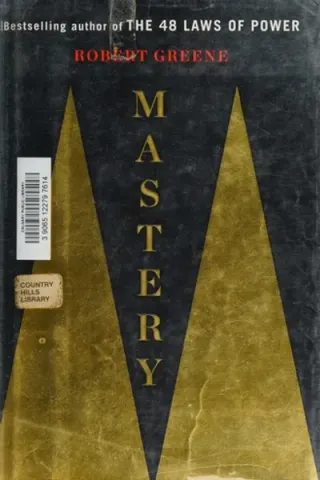
Mastery examines the lives of historical and contemporary masters — Leonardo da Vinci, Charles Darwin, Benjamin Franklin, Temple Grandin, Santiago Calatrava — to identify the universal process by which ordinary people develop extraordinary abilities. Greene argues that mastery follows a consistent three-phase pattern: apprenticeship, creative-active, and mastery.
During the apprenticeship phase, you submit to a mentor and deeply learn the fundamentals of your field. During the creative-active phase, you begin experimenting and developing your own voice. During the mastery phase, your accumulated knowledge becomes intuitive, allowing you to innovate with an authority that seems like natural talent but is actually the product of sustained, deliberate effort.
Greene emphasizes that the path to mastery is not pleasant. It requires years of patient practice, tolerance for boredom, resilience against social pressure to take easier paths, and the willingness to look foolish during the learning process. But he argues that mastery is the deepest human drive — more satisfying than money, status, or pleasure — and that denying this drive produces the restlessness and dissatisfaction that plague modern life.
Key Takeaways
Greene’s concept of the “Life’s Task” — the unique combination of inclinations and abilities that points toward your natural field of mastery — is a powerful framework for career direction. He argues that everyone has such a task, often visible in childhood interests, and that the first step toward mastery is identifying it and aligning your work accordingly.
The emphasis on the apprenticeship phase — learning by observation, practicing fundamental skills, and submitting to a master — challenges the modern obsession with self-expression and disruption. Greene argues that you earn the right to innovate only after you’ve deeply understood the rules, traditions, and foundations of your field.
The Verdict
Mastery is Greene’s most inspiring and constructive book. Where The 48 Laws of Power is cynical and The Laws of Human Nature is diagnostic, Mastery is genuinely aspirational. It makes a compelling, evidence-based case that greatness is earned, not given — and that the journey itself is the reward.