Hook
The most powerful man in the world — the Roman Emperor — wrote a private journal of Stoic reflections never intended for publication. Nearly two thousand years later, his battle against ego, anxiety, and distraction reads like it was written yesterday.
What It’s About
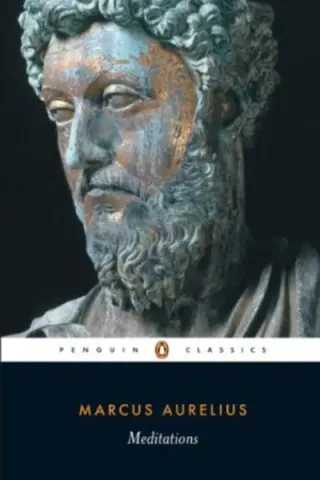
Meditations is the private journal of Marcus Aurelius, Roman Emperor from 161 to 180 AD. Written during military campaigns and the burdens of rule, it was never meant for an audience. The result is an unusually intimate encounter with one of history’s most powerful leaders as he struggles with the same challenges that plague everyone: anger, desire, anxiety, distraction, and the fear of death.
The book is not structured as an argument or narrative — it’s a series of short reflections, some just a sentence long, organized loosely into twelve books. Marcus repeatedly reminds himself of Stoic principles: focus on what you can control, accept what you cannot, fulfill your duties with excellence, treat others with justice, and remember that everything is temporary.
The writing oscillates between profound insight and mundane self-scolding. Some entries feel like polished aphorisms; others read like someone talking themselves through a bad day. This inconsistency is actually the book’s greatest charm — it shows philosophy not as an abstract system but as a daily practice used by a real human being struggling with real problems.
Key Takeaways
Marcus’s relentless focus on the transience of everything — fame, power, pleasure, even life itself — is not depressing but clarifying. When you truly internalize that “all is ephemeral,” petty frustrations lose their power and meaningful action becomes urgent. His refrain “You could leave life right now; let that determine what you do and say and think” is as powerful a productivity tool as any modern system.
His practice of viewing obstacles as opportunities — reframing every setback as raw material for virtue — anticipates modern Stoic writing like Ryan Holiday’s The Obstacle Is the Way. The idea that you can’t control events but can control your response to them is the beating heart of Stoicism, and Marcus demonstrates it in action.
The Verdict
Meditations is one of the most important books in Western philosophy, and its power lies in its imperfection. This isn’t a polished treatise — it’s a human being using philosophy as a survival tool. Read it slowly, a few pages at a time, and let Marcus’s struggles illuminate your own. The Gregory Hays translation is the most readable modern version.