Hook
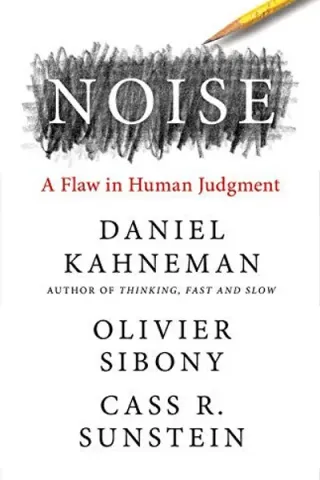
Two judges in the same courthouse, presented with the same case, hand down dramatically different sentences. Daniel Kahneman’s final book tackles a hidden source of error that’s as damaging as bias but far less discussed: noise.
What It’s About
Noise distinguishes between two types of errors in human judgment: bias (systematic deviation in one direction) and noise (random variability across judgments). While bias has been extensively studied, noise — the fact that different people make different judgments about the same case, and that the same person makes different judgments at different times — has been largely ignored.
Kahneman, Sibony, and Sunstein demonstrate that noise is pervasive and costly. Criminal sentences vary dramatically based on which judge you get, the weather, and whether the local team won. Insurance adjusters assessing the same claim give wildly different estimates. Doctors examining the same patient produce different diagnoses. And these aren’t edge cases — the variability is typically two to three times larger than people expect.
The book provides a taxonomy of noise (level noise, pattern noise, occasion noise) and practical strategies for reducing it: decision hygiene protocols, structured interviews, rating scales, independent assessments aggregated through simple algorithms, and noise audits. The authors argue that replacing human judgment with algorithms isn’t always desirable but that reducing unnecessary variability in judgment is almost always an improvement.
Key Takeaways
The “noise audit” — having multiple judges independently evaluate the same cases and measuring the variability — is the book’s most actionable recommendation. Most organizations are unaware of how much noise exists in their decision-making because they never measure it. The first step is awareness.
The finding that simple algorithms consistently outperform expert judgment in predictable tasks — from medical diagnosis to parole decisions — challenges our faith in human expertise. The issue isn’t that experts are bad; it’s that they’re noisy, and even a crude formula produces more consistent (and often more accurate) results.
The Verdict
Noise is an important book that identifies a real and underappreciated problem. It’s less groundbreaking than Thinking, Fast and Slow and occasionally repetitive, but the core insight — that unwanted variability in judgment is both measurable and fixable — has practical implications for any organization that makes consequential decisions.