Hook
Your house is not an asset. Your degree doesn’t make you smart about money. And everything your parents taught you about financial security might be wrong. At least, that’s what Kiyosaki claims.
What It’s About
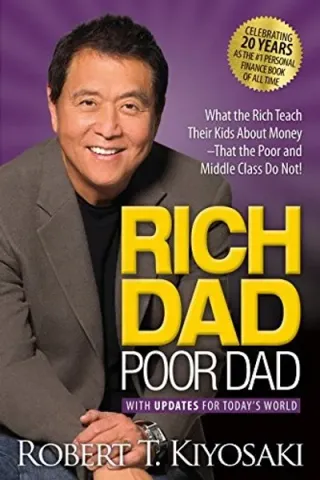
Rich Dad Poor Dad contrasts the financial philosophies of two father figures: his biological father (Poor Dad), a government employee who lived paycheck to paycheck, and his friend’s father (Rich Dad), a self-made entrepreneur who built wealth through assets and investments.
Kiyosaki’s core framework distinguishes between assets (things that put money in your pocket) and liabilities (things that take money out). By this definition, your house is a liability. Rich people buy assets while poor and middle-class people buy liabilities they think are assets.
The book is a compelling story with motivational generalities, but light on specific actionable advice. Some financial claims are questionable.
Key Takeaways
The asset-versus-liability framework, while oversimplified, is genuinely useful as a mental model. It forces you to ask about every purchase: does this put money in my pocket or take it out?
The emphasis on financial education is also valuable. Kiyosaki is right that most school systems teach nothing about money, investing, or entrepreneurship.
The Verdict
Rich Dad Poor Dad is a useful mindset book with real limitations. It’s excellent at challenging conventional financial thinking and terrible at providing specific guidance. Read it for the paradigm shifts, then read something more substantive for the how-to.