Hook
Everyone you know falls into one of four behavioral types — Red, Yellow, Green, or Blue — and understanding which color someone is can transform how you communicate with them. At least, that’s the promise.
What It’s About
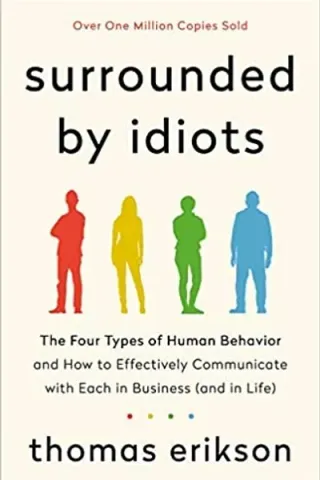
Surrounded by Idiots presents the DISC behavioral model through a color-coded framework. Red types are dominant, competitive, and direct. Yellow types are enthusiastic, optimistic, and social. Green types are patient, reliable, and conflict-averse. Blue types are analytical, detail-oriented, and perfectionist.
Erikson explains how each type communicates, what motivates them, what stresses them, and how to adapt your communication style to work effectively with each. The writing is accessible, often humorous, and packed with relatable examples from workplaces and relationships.
The model itself isn’t new — DISC has been used in corporate training for decades — and critics point out that personality is far more complex than four categories. Some behavioral psychologists have criticized the scientific validity of the framework. But as a simplified tool for increasing awareness of communication differences, it has practical value.
Key Takeaways
The most useful aspect is the forced awareness that other people genuinely think and communicate differently than you do. Understanding that a Blue type needs detailed information while a Red type wants the bottom line first can prevent frustrating miscommunications that have nothing to do with intelligence or goodwill.
The adaptation strategies — learning to flex your communication style based on who you’re talking to — are practical even if the underlying model is oversimplified. The concept of “speaking someone else’s language” is valuable regardless of which personality framework you use.
The Verdict
Surrounded by Idiots is an entertaining introduction to personality-based communication with significant scientific limitations. The four-color model is oversimplified and lacks robust empirical support, but as a practical awareness tool, it’s better than nothing. Read it for the communication strategies, not as psychological truth.