Hook
We think we’re good at reading people. We’re terrible at it — and the consequences range from awkward dinner parties to wrongful convictions and international espionage failures.
What It’s About
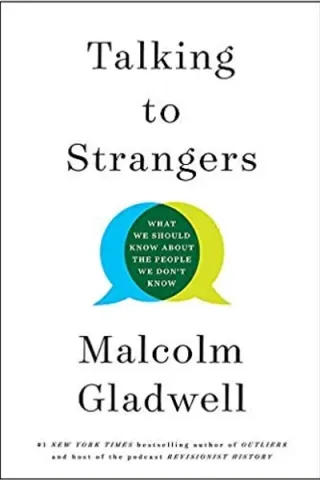
Talking to Strangers examines why humans are so bad at judging people they don’t know. Gladwell structures the book around high-profile cases — Sandra Bland, Bernie Madoff, Jerry Sandusky, Neville Chamberlain and Hitler — to illustrate three core problems.
First, we “default to truth” — we assume honesty until overwhelming evidence forces otherwise. Second, we believe people are “transparent” — that expressions match internal states — when they’re far less reliable than we think. Third, behavior is “coupled” to context in ways we systematically ignore.
Gladwell’s signature storytelling weaves between historical events, psychology research, and true crime with fluid transitions.
Key Takeaways
The “default to truth” concept is broadly useful. Our bias toward believing people is a feature, not a bug — society couldn’t function without it. But it means deception is devastatingly effective precisely because it exploits our wiring.
The critique of transparency — the assumption we can read emotions from faces — is important. Research shows people from different cultures don’t express emotions the same way. This has profound implications for law enforcement and hiring.
The Verdict
Talking to Strangers is classic Gladwell — fascinating stories, provocative ideas, and a narrative that moves at a clip. Not his strongest book, but the core insight that we’re systematically bad at reading strangers is important.