Hook
History’s most cunning strategists — from Machiavelli to Sun Tzu to Louis XIV — all played by the same unwritten rules. Robert Greene distills three thousand years of power dynamics into 48 brutally honest laws.
What It’s About
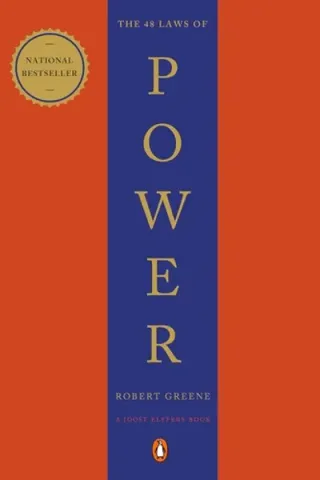
The 48 Laws of Power is a dense, encyclopedic guide to the mechanics of influence, manipulation, and social strategy. Each law — like “Never Outshine the Master,” “Conceal Your Intentions,” and “Use Selective Honesty to Disarm” — is illustrated with historical examples spanning ancient Rome, Renaissance Italy, Napoleonic France, and modern Hollywood.
Greene’s approach is amoral by design. He’s not telling you what’s right — he’s telling you what works, and what has worked for thousands of years. The book reads like a survival manual for navigating environments where power dynamics are unavoidable: corporate politics, negotiations, competitive industries. Some laws feel timelessly wise (“Always Say Less Than Necessary”), while others feel Machiavellian to the point of parody (“Crush Your Enemy Totally”).
The writing is engaging, the historical anecdotes are genuinely fascinating, and the book rewards both cover-to-cover reading and random browsing. But at 452 pages, there’s significant overlap between laws, and some examples feel cherry-picked to fit the narrative.
Key Takeaways
The most universally useful laws are about perception management. “So Much Depends on Reputation — Guard It with Your Life” and “Make Your Accomplishments Seem Effortless” capture real truths about how social capital works. Understanding these dynamics doesn’t require you to become a manipulator — it simply makes you harder to manipulate.
The book’s greatest value may be defensive. By understanding how power games are played, you can recognize when they’re being played on you. Greene makes a strong case that naivety about power doesn’t make you virtuous — it makes you vulnerable.
The Verdict
The 48 Laws of Power is fascinating, uncomfortable, and occasionally brilliant. Read it as a lens for understanding human behavior rather than a playbook for personal conduct. It’s not for everyone — the cynicism can be overwhelming — but it will sharpen how you see the social world.