Hook
A Western psychiatrist sits down with the Dalai Lama to understand the Buddhist approach to happiness — and discovers that most of what psychology tells us about suffering is already addressed by a 2,500-year-old tradition.
What It’s About
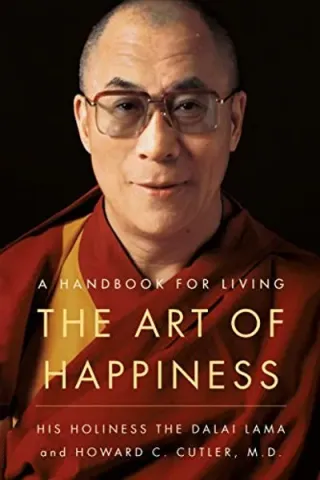
The Art of Happiness is a collaboration between the Dalai Lama and Howard Cutler, an American psychiatrist who conducted a series of interviews with the Tibetan spiritual leader. Cutler presents the Dalai Lama’s perspectives on happiness, suffering, relationships, and the mind, then contextualizes them with Western psychological research and his own clinical observations.
The Dalai Lama’s core thesis is that happiness is the purpose of life and that it can be achieved through mental training. Unlike Western psychology’s focus on reducing suffering, the Buddhist approach emphasizes actively cultivating positive mental states — compassion, patience, contentment, and inner peace. He argues that external circumstances contribute surprisingly little to happiness compared to one’s internal mental habits.
The dialogue format works well, with Cutler playing the skeptical Western interlocutor and the Dalai Lama responding with a combination of Buddhist wisdom, personal anecdotes, and disarming humor. Cutler weaves in relevant research from positive psychology, cognitive behavioral therapy, and neuroscience, showing how modern science often confirms what Buddhist practitioners have known experientially for millennia. The result is a book that bridges Eastern philosophy and Western science in an accessible, practical way.
Key Takeaways
The Dalai Lama’s argument that compassion is the most reliable source of happiness — not just for the recipient but for the giver — is well-supported by modern research on prosocial behavior. Studies confirm that acts of kindness and compassion activate reward centers in the brain and produce lasting improvements in wellbeing, far more than hedonic pleasures do.
The practice of “mental immunity” — systematically training the mind to resist negative states the way the body’s immune system resists pathogens — is an elegant framework for emotional regulation. The Dalai Lama argues that just as physical immunity requires exposure and practice, mental resilience is built through regular training in awareness, compassion, and perspective-taking.
The Verdict
The Art of Happiness is a gentle, wise book that bridges Eastern contemplative wisdom and Western psychology. It lacks the tactical specificity of modern self-help books, but the philosophical depth is far greater. Best for readers open to a contemplative approach to wellbeing who want to understand why compassion and mental training matter, not just that they do.