Hook
Most teams don’t fail because of strategy, talent, or resources. They fail because of five interrelated dysfunctions that Patrick Lencioni has mapped with surgical precision — and every team you’ve ever been on has suffered from at least one.
What It’s About
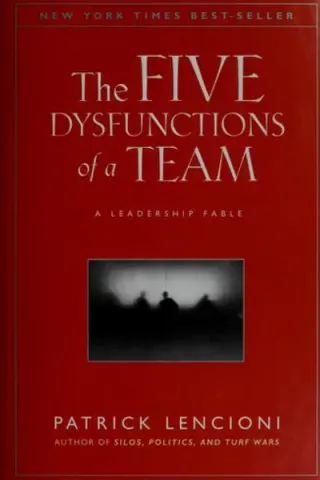
The Five Dysfunctions of a Team presents Lencioni’s model for why teams fail, delivered through a business fable about a new CEO named Kathryn who takes over a dysfunctional executive team at a struggling tech company. The story format makes the concepts vivid and memorable, even if the narrative is somewhat predictable.
The five dysfunctions form a pyramid. At the base is absence of trust — team members don’t feel safe being vulnerable with each other, so they hide mistakes and weaknesses. This leads to fear of conflict — without trust, people avoid productive debate and settle for artificial harmony. Without healthy conflict, there’s lack of commitment — people don’t buy into decisions they didn’t genuinely debate. Without commitment comes avoidance of accountability — team members don’t hold each other to standards because they were never truly committed. And without accountability, there’s inattention to results — individuals prioritize personal goals (ego, career, recognition) over team outcomes.
Lencioni provides a diagnostic assessment for identifying which dysfunctions affect your team, along with specific exercises and practices for addressing each one. The model is elegant — each dysfunction logically builds on the one below it, so addressing them requires starting at the foundation with trust.
Key Takeaways
The insight that trust — specifically, vulnerability-based trust — is the foundation of all team performance is Lencioni’s most important contribution. He defines trust not as predictability but as the confidence that your teammates’ intentions are good and that you don’t need to protect yourself. Building this kind of trust requires leaders to go first in admitting mistakes, asking for help, and showing vulnerability.
The reframe of conflict as healthy and necessary is equally valuable. Lencioni distinguishes between productive ideological conflict (debating ideas passionately) and destructive personal conflict (attacking people). Teams that avoid conflict don’t achieve harmony — they achieve artificial agreement that leads to passive resistance, back-channel politics, and poor decisions.
The Verdict
The Five Dysfunctions of a Team is one of the most useful books on team dynamics ever written. The fable format makes it fast and engaging, and the model is simple enough to remember but nuanced enough to be genuinely diagnostic. Required reading for any leader who manages a team.