Hook
Time management is dead. The real resource isn’t time — it’s energy. And the key to peak performance isn’t working longer hours; it’s managing your energy through strategic renewal, like an elite athlete.
What It’s About
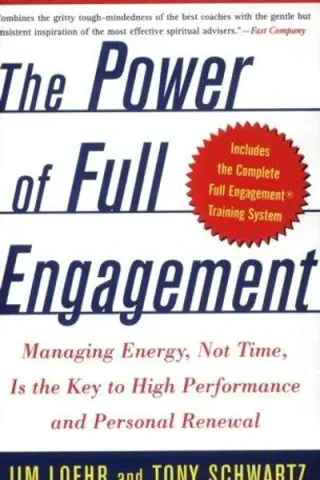
The Power of Full Engagement argues that the fundamental unit of performance management should be energy, not time. Loehr and Schwartz, who spent decades coaching professional athletes, apply their performance training model to corporate professionals and discover the same principle: peak performance requires a rhythmic alternation between energy expenditure and energy renewal.
The book identifies four sources of energy: physical (health, fitness, sleep), emotional (positive emotions, self-confidence, empathy), mental (focus, creativity, realistic optimism), and spiritual (purpose, passion, commitment). Each source can be depleted and renewed, and neglecting any one creates an energy deficit that undermines performance in all areas.
The practical framework involves three steps: define your purpose (what drives you at the deepest level), face the truth (audit where your energy actually goes versus where you want it to go), and take action (design specific rituals that ensure regular energy renewal). The authors argue that rituals — not willpower or discipline — are the key to sustained high performance, because rituals automate energy management and remove the need for constant decision-making.
Key Takeaways
The shift from time management to energy management is the book’s most paradigm-shifting contribution. Two people can have identical schedules, but the person who manages their energy — through exercise, sleep, emotional renewal, and purposeful engagement — will dramatically outperform the person who simply manages their calendar. This reframe explains why some people accomplish more in less time: it’s not efficiency, it’s energy.
The concept of “performance rituals” — small, consistent behaviors that ensure renewal across all four energy dimensions — is immediately practical. A 15-minute walk after lunch (physical), a gratitude practice before bed (emotional), a focused deep-work block each morning (mental), and a weekly purpose reflection (spiritual) can transform your performance without requiring more hours.
The Verdict
The Power of Full Engagement introduced ideas that are now widely accepted — energy management over time management, strategic renewal, and purpose-driven performance. The writing is solid if not spectacular, and some examples feel dated. But the core framework is sound, practical, and still ahead of how most people think about performance.