Hook
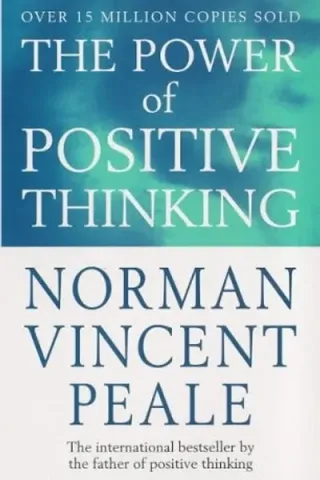
Published in 1952, The Power of Positive Thinking essentially invented the self-help genre. Peale’s formula — mix Bible verses with affirmation techniques — sold 5 million copies and launched an industry. But does it hold up?
What It’s About
The Power of Positive Thinking is a blend of Christian faith and early self-help psychology. Norman Vincent Peale, a minister, argues that faith in God combined with positive mental habits can overcome virtually any obstacle — worry, failure, illness, defeat, and self-doubt. The technique is consistent throughout: replace negative thoughts with positive affirmations, pray with conviction, visualize success, and believe that God is working in your favor.
Peale provides specific exercises: repeating phrases like “I can do all things through Christ who strengthens me” throughout the day, visualizing desired outcomes in vivid detail, and “emptying the mind” of negative thoughts through what he calls “spiritual drainage.” Each chapter addresses a specific problem — worry, anger, lack of energy, poor health — and prescribes the same fundamental solution: replace negative mental patterns with positive, faith-filled ones.
The writing is warm, confident, and filled with testimonials from people who applied Peale’s methods and saw dramatic results. For believers, the integration of faith and practical psychology may feel natural and powerful. For secular readers, the heavy religious framing and the implication that positive thinking can overcome structural obstacles may feel naive.
Key Takeaways
Peale’s emphasis on self-talk — the internal narrative we maintain about ourselves and our circumstances — was prescient. Cognitive behavioral therapy, developed decades later, confirmed that changing thought patterns changes emotional states and behavior. Peale’s affirmation techniques, stripped of their religious context, are essentially early CBT.
The book’s greatest limitation is its attribution of outcomes to attitude alone. Peale implies that faith and positive thinking are sufficient to overcome virtually anything, including poverty, illness, and discrimination. This ignores structural factors and can lead to victim-blaming: if you’re not succeeding, you must not be thinking positively enough.
The Verdict
The Power of Positive Thinking is historically important as the book that launched modern self-help. Some of its core insights about self-talk and mental habits have been validated by subsequent research. But the oversimplification, the religious framing, and the suggestion that attitude alone determines outcomes make it a product of its era. Modern readers will find more nuanced and evidence-based versions of these ideas in contemporary psychology.