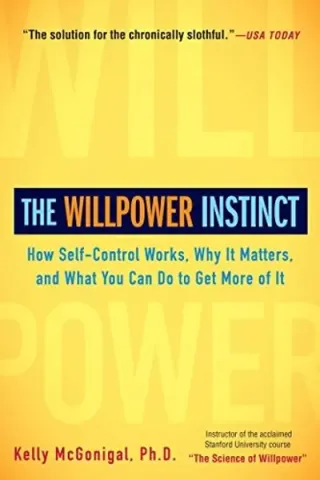
Hook
Willpower isn’t a character trait — it’s a muscle that fatigues, a biological response you can train, and a science that’s been misunderstood for centuries.
What It’s About
Based on McGonigal’s popular Stanford course, the book synthesizes research on three types of willpower: “I will” (doing what you need), “I won’t” (resisting temptation), and “I want” (remembering long-term goals). McGonigal explains willpower as a biological response managed by the prefrontal cortex and depleted by stress.
Each chapter ends with practical exercises, from meditation to “surfing the urge.” The course structure gives the book a progressive quality that rewards reading cover to cover.
Key Takeaways
The most counterintuitive finding: self-criticism undermines willpower. People who forgive themselves for failures are more likely to get back on track. The biology of willpower is also illuminating — sleep, blood sugar, stress, and exercise have enormous impact on self-control, reframing failures as resource management problems rather than character defects.
The Verdict
The most scientifically grounded and practically useful book on self-control available. If you struggle with any form of self-control, this book offers genuine help.