Hook
Bill Campbell coached the CEOs of Apple, Google, Amazon, and countless other Silicon Valley companies. When he died in 2016, Steve Jobs, Larry Page, and Jeff Bezos all credited him as indispensable. This is the playbook he never wrote.
What It’s About
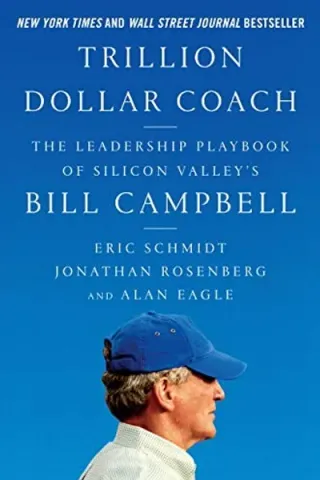
Trillion Dollar Coach captures the management philosophy and coaching methods of Bill Campbell, a former Columbia football coach who became Silicon Valley’s most influential behind-the-scenes advisor. Written by three former Google executives who were coached by Campbell, the book distills his approach through interviews with over 80 people he mentored, including Steve Jobs, Sheryl Sandberg, and Ben Horowitz.
Campbell’s philosophy centered on a few core principles: people are the foundation of every company, trust is the most important factor in team performance, and leaders should serve their teams rather than the other way around. He believed in starting every meeting with “trip reports” (personal updates that build connection), making decisions by ensuring everyone was heard and then committing fully, and building what he called “psychological safety” — though he used football metaphors rather than academic terminology.
The book is structured around Campbell’s key practices: building trust through candid feedback, coaching teams rather than individuals, prioritizing operational excellence, and leading with love — a concept Campbell embodied by genuinely caring about people’s personal lives, families, and wellbeing, not just their business performance.
Key Takeaways
Campbell’s emphasis on “team first” — solving for the team’s performance before individual performance — is his most counterintuitive contribution. While most management advice focuses on individual coaching, Campbell argued that the team dynamic is more important than any individual’s talent. He focused on building trust, resolving interpersonal friction, and ensuring that meetings were places where real debate could happen.
The concept of “free-form listening” — giving people your complete, undivided attention without formulating responses — was Campbell’s signature coaching technique. He would sit with someone, listen fully, ask probing questions, and resist the urge to give advice until the person had talked through the problem themselves. This simple practice built deep trust and often led to better solutions than top-down direction would have.
The Verdict
Trillion Dollar Coach is an engaging tribute to a remarkable figure, and the leadership principles are sound and practical. The book occasionally reads more like a eulogy than a management guide, and some lessons feel specific to Silicon Valley’s culture. But Campbell’s emphasis on trust, candor, and genuine care for people transcends any industry.