Hook
The habits that made you successful at one level become the obstacles that prevent you from reaching the next. Marshall Goldsmith, who has coached over 150 CEOs, identifies twenty behavioral flaws that sabotage leaders — and most of them are things you’re proud of.
What It’s About
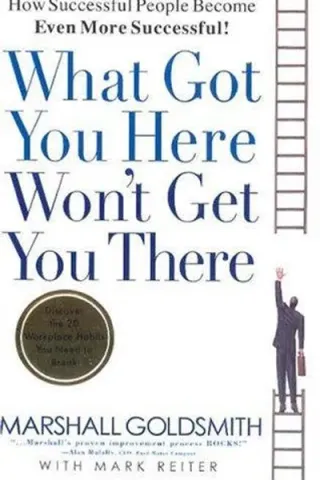
What Got You Here Won’t Get You There argues that successful people’s biggest challenges aren’t skill deficits — they’re behavioral habits that worked earlier in their careers but become liabilities at senior levels. Goldsmith, the world’s most prominent executive coach, identifies twenty specific habits that hold successful people back, from “winning too much” to “adding too much value” to “failing to express gratitude.”
The twenty habits share a common theme: they’re all rooted in the ego and the need to show that you’re the smartest, most competent person in the room. Adding your two cents to every idea (even when it diminishes the other person’s ownership), needing to win every argument, claiming credit, making excuses, and refusing to apologize — these behaviors work in individual contributor roles where personal performance is paramount, but they poison leadership, where your job is to make others successful.
Goldsmith provides a practical methodology for change: solicit honest feedback, apologize for past behavior, advertise your intention to change, listen without defending, express gratitude, and follow up consistently. He emphasizes that behavioral change is simple but not easy — the hardest part is accepting that the behaviors that got you here are the ones holding you back.
Key Takeaways
The concept of “adding too much value” is Goldsmith’s most counterintuitive insight. When a direct report brings you an idea and you say “Great idea, and you should also consider…” you’ve just reduced their ownership of the idea from 100% to 50%. Your 5% improvement in the idea’s quality comes at the cost of a 50% reduction in their commitment to executing it. For leaders, the math rarely works out.
Goldsmith’s feedback methodology is immediately practical. He recommends “feedforward” instead of feedback — asking people not what you did wrong in the past (which triggers defensiveness) but what you should do differently in the future (which focuses on growth). This simple reframe makes the conversation more productive and less threatening for everyone involved.
The Verdict
What Got You Here Won’t Get You There is a humbling, practical book for successful people who’ve hit a plateau. Goldsmith’s twenty habits are uncomfortable to read because most high-achievers will recognize themselves in at least half of them. The writing is direct and the methodology is proven across thousands of executive coaching engagements. Essential reading for anyone in a leadership role.